A Dyson vacuum that suddenly loses suction or leaves debris behind usually points to a dirty brush bar. Hair, dust, and fibers wrap around the roller over time, and if you’ve picked up a wet spill, moisture can soak into the fabric. For models like the Dyson Gen5 Outsize with the Fluffy Optic Head, knowing how to clean a Dyson vacuum brush bar properly protects your machine from permanent damage and keeps it performing like new.
This guide covers every step of the process, from safe disassembly to drying and reassembly. You’ll also learn critical safety rules, troubleshooting tips, and how to reach Dyson support if you need extra help.
Disconnect the Cleaner Head from the Wand
Start by removing the Fluffy Optic Head from the vacuum wand. On the Dyson Gen5 Outsize, press the release button on the wand and pull the cleaner head free. This step gives you full access to the brush bar and prevents the vacuum from accidentally turning on during cleaning.
Place the head on a clean, dry surface away from bathrooms or sinks. Keeping it away from moisture at this stage protects the internal components from accidental water exposure.
Unlock and Remove the Brush Bar
Locate the Release Toggle
Look at the side of the cleaner head for a small toggle or button. It sits flush with the housing, so you may need to look closely. Press it firmly; it often requires a bit of force to activate.
Pull the End Cap Straight Out
With the toggle pressed, pull the end cap straight out. Avoid twisting or yanking at an angle, since this can damage the locking mechanism. If the cap sticks, check for hair or dust blocking the toggle and clear it before trying again.
Once the end cap comes off, the soft roller slides free from the housing. Set the end cap aside in a dry spot. Do not wash it, as it contains metal bearings that can rust.
Understand Why the End Cap Stays Dry
The end cap houses small metal bearings that allow the brush bar to spin smoothly. Even a quick rinse can introduce moisture that leads to rust, friction, and eventual motor strain. Leaving the end cap dry protects the long-term performance of your vacuum.
Wash the Soft Roller with Cold Water
Skip the Soap Completely
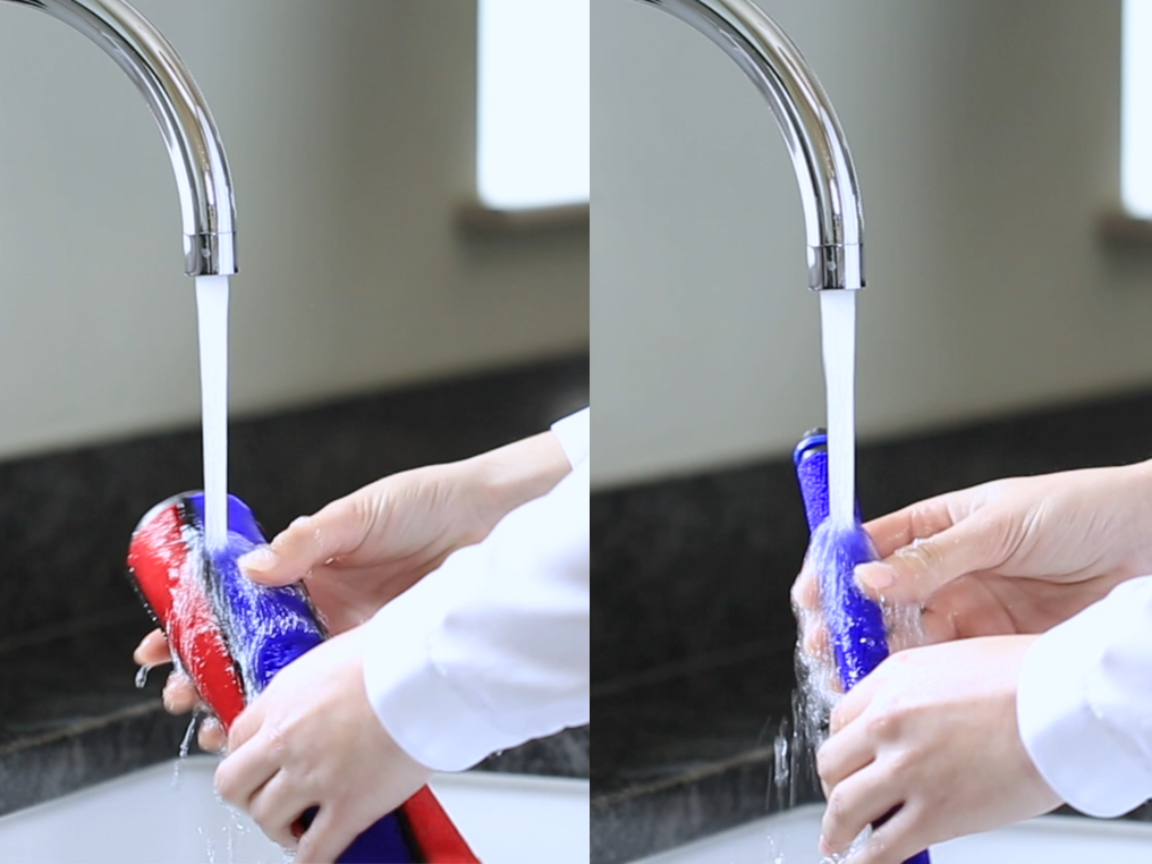
Hold the soft roller under cold running water only. Never use hot water, as it can weaken adhesives or warp internal components. Soap, detergent, and other cleaning agents are also off-limits because they degrade the fabric and leave residue that attracts more dirt.
Rub Gently to Remove Debris
Massage the fabric surface with your fingers to loosen dried spills, pet hair, and stuck-on debris. For stubborn buildup, a soft-bristled brush like an old toothbrush can help. Avoid aggressive scrubbing, since the soft roller is more delicate than traditional bristle heads.
Dry the Brush Bar for at Least 24 Hours

Squeeze and Stand Upright
After rinsing, gently squeeze the roller to remove excess water. Do not twist or wring it, since this can misalign the internal structure. Stand the roller upright on one end in a well-ventilated area so air circulates evenly around it.
Be Patient With Drying Time
Allow at least 24 hours of drying time before reassembly. Even if the surface feels dry, moisture can linger inside the roller. Using the vacuum too soon risks mold, mildew, and unpleasant odors.
If you notice a musty smell after the first 24 hours, extend the drying time by another 12 to 24 hours. A lingering odor signals residual moisture that needs more time to evaporate.
Reassemble the Brush Bar
Slide the Roller Back Into the Housing
Once the roller is completely dry, align it with the slots in the cleaner head and slide it in straight. It should move smoothly without resistance. If it sticks, double-check for obstructions or misalignment.
Reattach the End Cap and Cleaner Head
Snap the end cap back into place until you hear a light click. Confirm it is secure before reconnecting the cleaner head to the vacuum wand. Turn the vacuum on briefly over a hard floor to test that the brush bar spins correctly. If it doesn’t rotate, switch off the machine immediately and inspect for debris or improper assembly.
Handle Wet Spills and Routine Debris
After Vacuuming Liquids
The Fluffy Optic Head is designed for hard floors and can absorb liquid. If you’ve cleaned up a wet spill, remove and rinse the brush bar right away. Delayed cleaning can lead to staining, odors, and fabric degradation.
For Hair and Fiber Buildup
Hair and fibers often wrap around the roller, especially in homes with pets. Inspect the brush bar before and after each use, and use scissors to cut through tangled strands. Never pull hair off forcefully, since this can damage the fabric.
Follow Model-Specific Care for the Fluffy Optic Head
The soft roller uses a fabric surface instead of stiff bristles, so it needs gentle handling. Stick to hand rubbing and cold water only, and avoid sharp tools or harsh scrubbing. This head type works best on tile, wood, and laminate. While it can handle light debris on rugs, frequent carpet use increases hair wrap and wear, so plan on cleaning more often if you switch between floor types.
Speed Up Drying the Safe Way
Never use a hair dryer, radiator, or oven to dry the brush bar. Excessive heat can melt plastic components, warp the roller, and damage internal parts. Instead, place the roller near a fan or open a window to improve airflow. Direct sunlight should also be avoided, as it can degrade the fabric over time. The 24-hour rule still applies, so patience is the only safe shortcut.
Troubleshoot Common Brush Bar Problems
Brush Bar Won’t Unlock
Debris is likely blocking the toggle or end cap. Use a toothpick or small tool to clear hair or dust from the mechanism, press the toggle firmly, and pull the end cap straight out.
Smell Persists After Drying
Incomplete drying is the usual cause. Extend the drying time by 12 to 24 hours and make sure the roller is upright in a dry, airy space.
Roller Doesn’t Spin After Reassembly
Turn off the vacuum and remove the cleaner head. Check for obstructions, confirm the roller is fully dry, and ensure proper alignment before reattaching.
Residue Still Visible
Rinse again with cold water and gently rub the surface. Avoid chemicals, as they tend to make residue problems worse over time.
Stick to These Critical Safety Rules
A few non-negotiable rules protect your vacuum from costly damage:
- Never wash the end cap because it contains metal bearings that can rust.
- Never use soap or detergent on the soft roller.
- Never operate the vacuum with a damp brush bar, since moisture can reach the motor.
- Never use heat to dry components, as it warps plastic and damages internal parts.
Keep Your Brush Bar in Top Shape
Inspect the brush bar before and after each use to catch debris early. Clean it after any wet pickup, even small spills, to prevent odors. Store the vacuum in a dry area, avoiding damp closets or garages where humidity can affect components. If the fabric becomes frayed, discolored, or stops picking up debris, consider a replacement. Dyson sells genuine parts, and third-party rollers often don’t fit or perform as well.
Know When to Contact Dyson Support
If you need model-specific help, locate the serial number on the vacuum body. The format looks like 123-IN-A12345 or AB1-IN-A123456, and the first three digits identify your machine. Dyson India offers support through these channels:
- Phone: 1800-258-6688 (toll-free) or 011-42302188
- Email: support@dyson.in
- WhatsApp: +91 8800560658
- Hours: 09:00 to 18:00
Support can help with replacement parts, troubleshooting, and model-specific guidance.
Frequently Asked Questions About Cleaning a Dyson Vacuum Brush Bar
Can I use soap to wash the brush bar?
No. Soap and detergent can damage the fabric and leave residue that attracts more dirt. Cold water alone is the only safe option for cleaning the soft roller.
How long does the brush bar need to dry?
Allow at least 24 hours of drying time before reassembling or using the vacuum. If a musty smell lingers, add another 12 to 24 hours to make sure all moisture is gone.
What happens if I wash the end cap?
The end cap contains metal bearings that can rust when exposed to water. Rust leads to friction, noise, and eventual motor strain. Always keep the end cap dry.
Can I use a hair dryer to speed up drying?
No. Heat can warp plastic components and damage the roller. Air drying in a ventilated area is the only safe method.
How do I know when the brush bar needs replacing?
Visible fraying, discoloration, or reduced pickup performance are signs the roller is worn out. Dyson sells genuine replacements that fit your specific model.
Key Takeaways for Cleaning Your Dyson Brush Bar
Learning how to clean a Dyson vacuum brush bar is simple when you follow the right steps. Always use cold water, never wash the end cap, and wait a full 24 hours before reassembly. These habits prevent mold, odors, and motor damage, keeping your vacuum running at peak performance. For the best results, inspect the brush bar regularly and clean it after every wet spill. If you run into issues you can’t solve, Dyson support is just a call or message away.