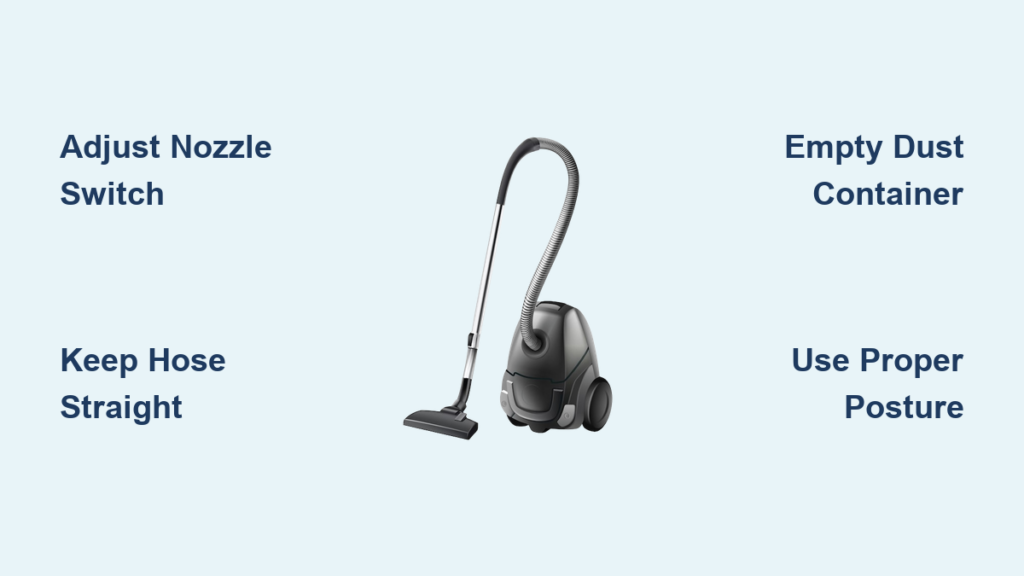
If you’ve just brought home a canister vacuum or are switching from an upright model, you might feel unsure about where to start. Unlike uprights that stand on their own, canister vacuums operate with a two-part system: the main unit rolls behind you while you guide a lightweight wand and nozzle across the floor. This design offers superior reach and floor protection, but only when used correctly. Knowing how to use a canister vacuum properly makes a real difference in cleaning efficiency, equipment longevity, and floor safety.
The key lies in understanding the components, adjusting for your floor type, and mastering the coordination between the wand and canister. Many users struggle at first, especially when the vacuum feels hard to push or tips over unexpectedly. These issues are usually solved with simple adjustments, like flipping a switch on the floor nozzle. In this guide, you’ll learn step-by-step how to operate your canister vacuum with confidence, avoid common mistakes, and get the most out of its powerful suction and versatile reach.
Get Familiar with the Core Components
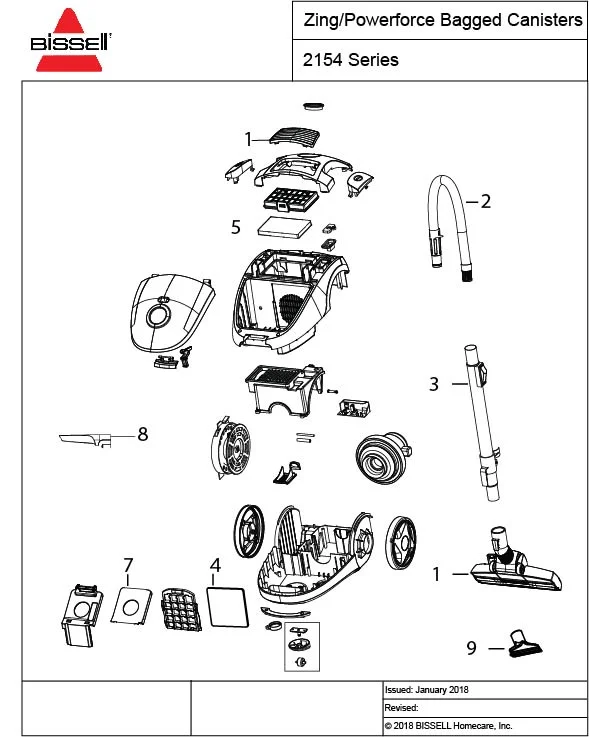
Before turning on your vacuum, take a few minutes to understand the four main parts. Each one plays a critical role in performance and ease of use.
Identify the Canister Unit
The canister is the main body of the vacuum, housing the motor, dust collection system, and filtration. It rolls on wheels and trails behind you as you clean. Always check that the dust bag or bin is empty and properly seated before use. A full container kills suction and strains the motor. The power cord typically retracts into the canister, and most models include a cord wrap feature for tidy storage.
Handle the Wand Correctly
The wand is the long, lightweight tube that connects the hose to the floor nozzle. It requires two-handed control: one hand guides the nozzle across the floor, while the other stabilizes the wand. Extend it fully for floor cleaning or shorten it for above-floor tasks. Never carry the canister by the wand. The wand isn’t built to support that weight and could bend or break.
Attach the Hose Securely
The hose links the canister to the wand and provides flexibility for cleaning stairs, furniture, and ceilings. Make sure both ends click firmly into place. A loose hose connection causes suction loss. Test for airtight seals by powering on the vacuum and listening for hissing or air leaks. If the hose is kinked or twisted, it restricts airflow and reduces cleaning power.
Adjust the Floor Nozzle Switch
One of the most overlooked yet crucial steps in learning how to use a canister vacuum is setting the floor nozzle correctly. This small switch makes a big difference in how easily the vacuum glides across your floors.
Choose Hard Floor Mode
Flip the switch on the floor nozzle to the hard floor setting when cleaning tile, hardwood, laminate, or vinyl. In this position, the brush roll lifts slightly to prevent unnecessary friction. The vacuum moves smoothly without digging in or scattering debris. Using carpet mode on hard floors creates excessive drag and can scratch surfaces.
Switch to Carpet Mode
When transitioning to carpeted areas, flip the switch to carpet mode. This lowers the brush roll into contact with the fibers, agitating dirt and pet hair for deeper cleaning. Failing to switch modes is the most common reason users report their vacuum is “hard to push.” Always adjust the setting before you start cleaning each new surface.
Fix Nozzle Drag Immediately
If the vacuum resists movement, stop and check the switch. Even on low-pile rugs, using the wrong setting increases friction. After adjusting, test the nozzle on a small area. It should glide effortlessly. If it still drags, inspect the brush roll for tangled hair or debris wrapped around it.
Clean Floors with Proper Technique
Using a canister vacuum effectively means more than pushing it back and forth. Your posture, pace, and handling directly affect cleaning performance.
Maintain an Upright Posture
Stand straight with your back neutral. Use your arms to guide the wand, not your torso. This reduces strain and gives you better control. Unlike upright vacuums that require bending, canister models promote ergonomic movement, so take full advantage of it.
Let the Canister Follow Naturally
Don’t yank or pull the canister aggressively. Walk at a steady pace and allow the unit to roll behind you. Keep the hose as straight as possible to prevent the canister from tipping or banging into furniture. If your model has swivel casters, it will track more smoothly around corners and obstacles.
Clean Under Furniture Easily
Slide the slim nozzle under sofas, beds, and cabinets without moving heavy furniture. Angle the wand to reach deep into corners. For best results, make slow, overlapping passes. Rushing reduces effectiveness because the suction needs time to lift embedded dust and pet hair from fibers.
Use Your Vacuum for Above-Floor Cleaning

One of the biggest advantages of a canister vacuum is its ability to clean far beyond the floor. With the right attachments, it becomes a whole-home cleaning tool.
Reach High Surfaces
Remove the wand extension if needed and use just the hose to clean ceilings, crown molding, and light fixtures. Attach a dusting brush for delicate surfaces. For ceiling fans, drape a microfiber cloth over the blades and vacuum through the fabric to trap dust without scattering it.
Clean Stairs Efficiently
Place the canister at the top or bottom of the staircase. Use the wand to clean each step from top to bottom. A crevice tool helps remove debris from the junction between tread and riser. For carpeted stairs, use carpet mode and make firm, upward strokes to lift embedded dirt.
Target Pet Hair and Dust Bunnies
Use the upholstery tool to remove pet hair from couches, chairs, and car interiors. For tight corners and baseboards, switch to the crevice tool. The canister’s strong suction pulls hair and dust out of hiding spots where other vacuums can’t reach.
Prevent Common Problems

Even well-designed vacuums can malfunction if used incorrectly. These quick checks will keep your canister running smoothly.
Stop the Canister from Tipping
Tipping happens when the hose twists or you pull too fast. Prevent it by keeping the hose untangled and walking at a moderate pace. If your model tends to tip, consider adding rubber wheel covers to improve stability and floor protection.
Restore Lost Suction
If suction weakens, check three things:
- Dust container or bag: Empty or replace it immediately. A full bin kills suction.
- Hose blockage: Detach the hose and shine a flashlight through it. Use a broom handle to dislodge debris.
- Filters: Wash or replace pre-motor and HEPA filters as recommended. Dirty filters restrict airflow and reduce performance.
Avoid Floor Scratches
If you have hardwood or tile, choose a model with rubber wheels. Plastic wheels, common on budget models, can scratch or mar delicate finishes. If your vacuum has plastic wheels, install aftermarket rubber covers. They’re inexpensive and easy to attach.
Optimize for Different Homes
Your cleaning approach should match your home’s layout and flooring. A few smart adjustments make the vacuum more effective.
For Hard Floor Homes
Prioritize models with rubber wheels and a clear hard floor setting. Use slow, deliberate strokes to pick up fine dust and crumbs. Avoid using the brush roll on smooth surfaces, as it can scatter debris rather than collect it.
For Pet Households
Select a model with strong suction, a brush roll that turns off for hard floors, and HEPA filtration to trap dander. Use the crevice tool daily on pet bedding and furniture. Empty the dust bin after each use to prevent odors. The long hose makes it easy to clean car interiors and high perches where pets shed.
For Mixed Flooring
If your home has both carpet and hard floors, switch the nozzle setting every time you change rooms. Keep the hose long enough to avoid constant unplugging when moving between areas.
Follow Best Practices Daily
A few simple habits ensure your canister vacuum stays powerful and lasts for years.
Prepare Before Each Use
- Set the nozzle switch to match the floor type.
- Empty the dust bin or replace the bag if it’s more than half full.
- Check hose connections for tightness.
- Extend the power cord fully before turning on. Partial extension can overheat the motor.
Clean with Consistency
Use overlapping strokes, moving forward and backward slowly. Let the suction do the work. For high-traffic areas, go over the same spot twice. When transitioning between rooms, pause to adjust the nozzle setting before continuing.
Maintain After Every Session
- Empty the dust container immediately.
- Detach and store the hose neatly without kinks.
- Wipe the nozzle and wand with a dry cloth.
- Wrap the cord using the built-in reel.
- Store the vacuum in a dry, cool place away from direct sunlight.
Troubleshoot Key Issues Fast
Even with proper use, problems can arise. Here’s how to fix them in minutes.
Vacuum Is Hard to Push
Cause: Incorrect nozzle switch setting.
Fix: Flip the switch to match the floor surface. This single step resolves most pushing issues. If it persists, check for debris wrapped around the brush roll.
Canister Keeps Tipping
Cause: Twisted hose or aggressive pulling.
Fix: Straighten the hose and slow your pace. Ensure the wheels roll freely. If tipping continues, upgrade to rubber wheel covers for better balance.
Suction Feels Weak
Cause: Full dust bin, clogged hose, or dirty filter.
Fix: Empty the bin, inspect the hose for blockages, and clean or replace filters. Let washable filters dry completely before reinstalling.
Wheels Scratch the Floor
Cause: Plastic wheels on hard surfaces.
Fix: Replace with rubber wheels or apply protective wheel caps.
Extend Your Vacuum’s Lifespan
Regular care keeps your canister vacuum running like new for years.
Clean Filters Monthly
Pre-motor and HEPA filters trap fine particles and protect the motor. Wash reusable filters with water every four to six weeks. Let them air-dry for 24 hours before reinserting. Replace disposable filters as the manual recommends, usually every six to twelve months.
Inspect the Hose Periodically
Look for cracks, soft spots, or kinks. A damaged hose reduces suction and can develop leaks. Store it loosely coiled to prevent permanent bends. If you notice reduced airflow, test with a different attachment to isolate the issue.
Follow Warranty Guidelines
Keep your receipt and register the product if required. Most warranties cover motor and electrical components for five to ten years. Using non-OEM parts or neglecting maintenance can void coverage. Store the manual in a safe place for reference.
Frequently Asked Questions About Canister Vacuums
Why is my canister vacuum so hard to push?
The most common reason is an incorrect floor nozzle switch setting. Flip the switch to match your floor type. Hard floor mode lifts the brush roll for smooth surfaces, while carpet mode lowers it for fibers. Using the wrong setting creates excessive friction.
Can I use a canister vacuum on hardwood floors?
Yes, canister vacuums are excellent for hardwood floors, especially models with rubber wheels and a dedicated hard floor setting. This combination prevents scratches and allows the wand to glide smoothly without scattering debris.
How do I prevent my canister vacuum from tipping over?
Keep the hose straight and untangled, and walk at a steady pace rather than pulling aggressively. Models with swivel casters track more smoothly. If tipping persists, add rubber wheel covers for better stability.
Where should I store my canister vacuum?
Store it in a dry, cool place away from direct sunlight. Wrap the cord using the built-in reel, coil the hose loosely to prevent kinks, and keep attachments together so everything is ready for the next cleaning session.
How often should I empty the dust container?
Empty the dust container or replace the bag after every cleaning session, or sooner if it’s more than half full. A full container reduces suction and strains the motor. Pet households may need to empty it more frequently.
Are canister vacuums good for pet hair?
Yes, canister vacuums are highly effective for pet hair. The long hose and lightweight wand reach under furniture, into corners, and up stairs where pet hair accumulates. Look for models with HEPA filtration to trap dander and strong suction for embedded hair.
Key Takeaways for Using a Canister Vacuum
Mastering how to use a canister vacuum comes down to three essentials: understanding the components, adjusting the floor nozzle switch for each surface, and maintaining good posture while cleaning. Always check the nozzle setting before you start, keep the hose straight to prevent tipping, and empty the dust container after every session.
Your next step is simple: pick one room in your home, apply these techniques, and notice the difference in how the vacuum handles and how clean your floors feel. With regular care and smart habits, your canister vacuum will deliver reliable, scratch-free performance for years to come.