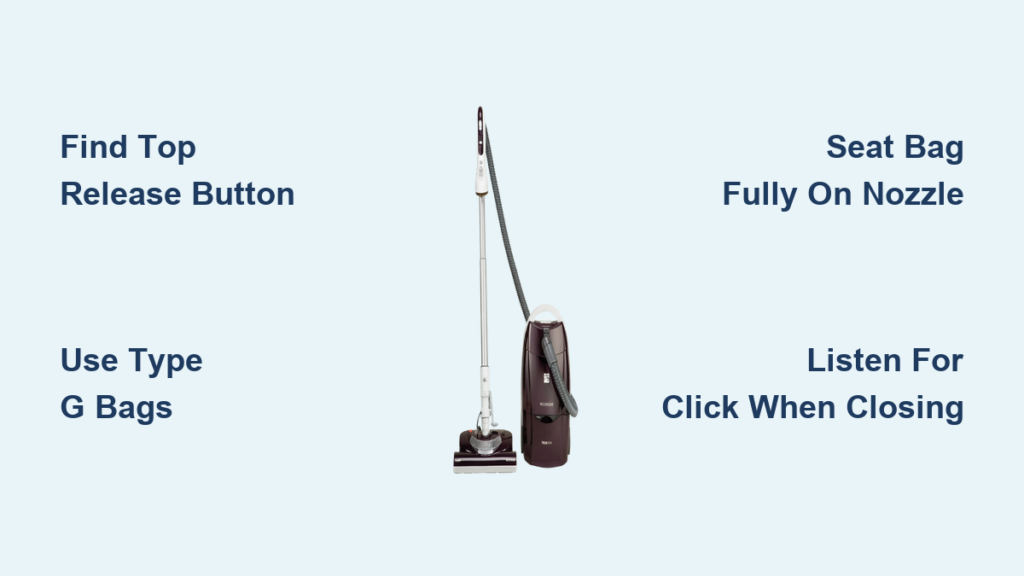
A Kenmore vacuum that suddenly loses suction often has one simple cause: a full or clogged bag. The good news is that learning how to change a Kenmore vacuum bag takes less than five minutes once you know where the hidden release mechanism sits. Many owners waste time prying at the wrong panels because the bag compartment on the Kenmore 116 True HEPA canister vacuum is not where most people expect.
This guide shows you exactly where to look, how to remove the old bag without making a mess, and how to seat a new one for a perfect airtight seal. You will also learn which replacement bags to use, how to troubleshoot common fit issues, and how to keep your vacuum running like new for years.
Locate the Bag Compartment on the Kenmore 116
Find the Top Release Button Behind the Handle
The bag compartment on the Kenmore 116 does not open from the side, front, or bottom. It opens from the top. Look on the upper housing just behind the carry handle, where you will find a small release button that sits flush with the surface.
Press down firmly on this button and the compartment door will pop open slightly. From there, you can swing it fully open on its hinge. If nothing happens, make sure the vacuum is upright and that no tension is pulling on the hose or power cord.
Confirm You Have the Correct Model
Before swapping bags, verify that you own the Kenmore 116 series True HEPA canister vacuum. This model uses Type G bags and has a sealed filtration system designed to trap allergens. Models with a bag indicator gauge or electronic display usually share the same top-release design.
If you are unsure, check your user manual. Page 14 contains a small diagram showing the exact location of the bag compartment and release button.
Pro Tip: Never pry at seams or twist panels. The top-release design is intentional, and forcing other openings can crack the HEPA seal or break the latch.
Remove the Old Vacuum Bag Safely
Open the Compartment and Pull the Bag Straight Out
Once the door swings open, grip the old bag by its cardboard collar (the rigid rim that seals against the intake). Pull it straight out without twisting or yanking. Older bags can tear easily, and a ripped bag will dump dust back into the canister.
Inspect the Empty Chamber for Debris
Before installing a new bag, take a moment to check the empty chamber:
– Wipe out loose dust or paper fragments with a dry microfiber cloth
– Make sure the central intake nozzle is clear
– Look for any bag pieces left behind from a previous tear
A quick clean here keeps suction strong and helps the new bag seat properly.
Warning: Never run the vacuum without a bag, and never use a torn bag. Both can damage the motor and may void your warranty.
Install a New Kenmore Type G Bag
Choose Genuine Kenmore Type G Bags
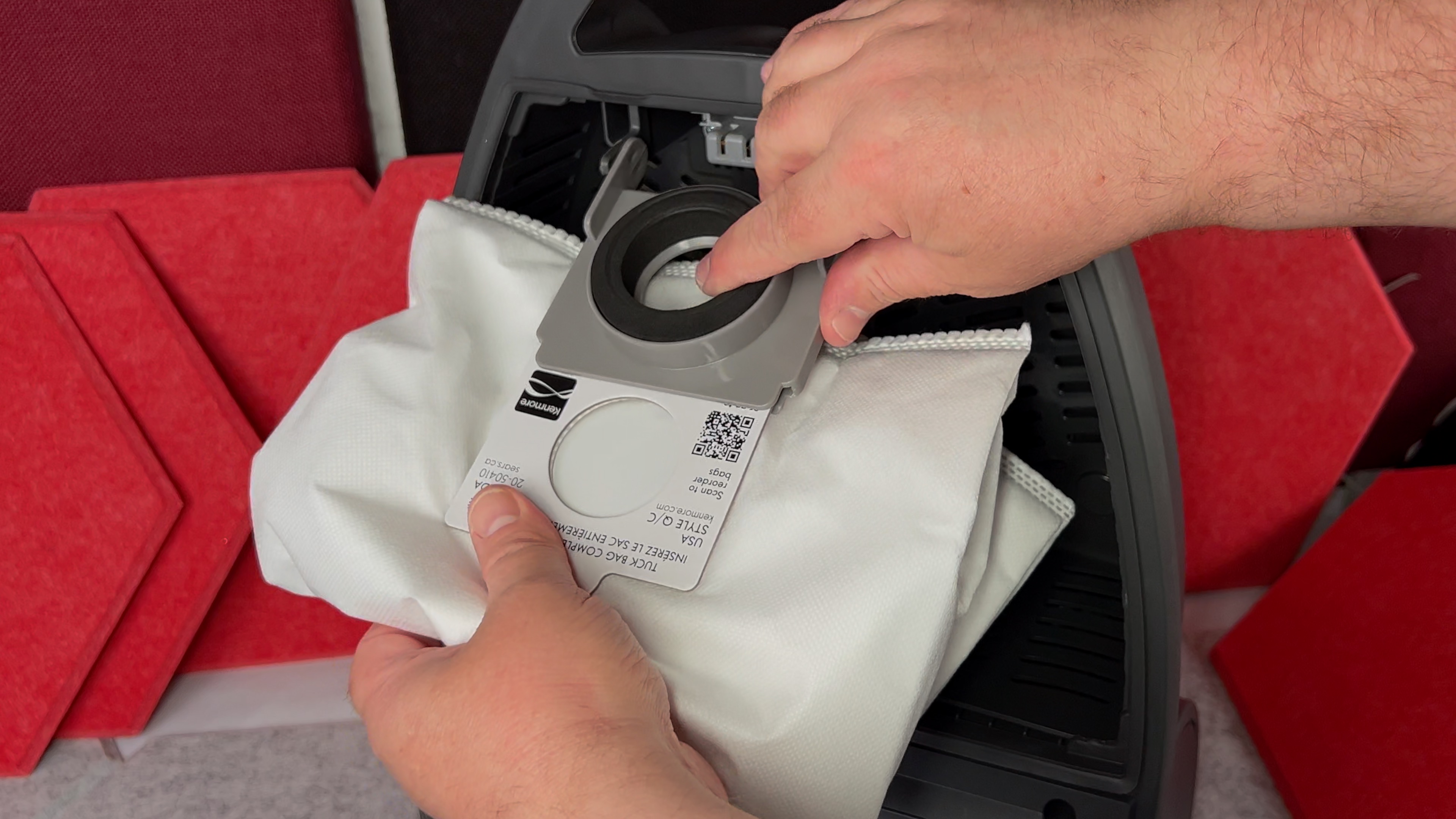
Always use genuine Kenmore Type G replacement bags. These are made to fit the 116 model’s intake nozzle and maintain the airtight HEPA seal. Off-brand or universal bags often stretch, shrink, or fail to seal, which lets allergens escape and reduces suction.
Check that the new bag is flat, dry, and undamaged before inserting it.
Seat the Bag on the Intake Nozzle
Hold the new bag by the cardboard collar and align it with the central intake nozzle inside the chamber. Push straight on until the collar seats fully. There should be no gaps, wrinkles, or folds around the rim.
Confirm the following before closing the door:
– The bag hangs straight down without twisting
– The opening is centered over the intake
– The bag is not blocking the door latch
Expert Note: Some Kenmore 116 units include a small retention clip or spring arm near the top of the chamber. If yours has one, hook the upper edge of the bag under the clip to keep it from shifting during use.
Close and Secure the Bag Compartment

Listen for the Click
After the new bag is in place, swing the compartment door closed. A properly sealed door will make a distinct click when the latch engages. Give the door a light tug to confirm it will not pop back open.
Reopen and Realign if the Door Will Not Shut
If the door refuses to close, the bag is almost always the reason. Reopen the compartment and check for:
– A folded-over bag edge near the latch
– Misalignment between the collar and intake nozzle
– Debris caught in the hinge or seal
Never force the door shut. Forcing it can crack the latch or bend the hinge, leading to costly repairs.
Troubleshoot Common Bag Replacement Problems
The New Bag Feels Too Tight or Too Loose
A bag that does not fit correctly usually points to the wrong product. Make sure you are using a genuine Kenmore Type G bag designed for the 116 series. Avoid Type U, universal fit, or off-brand alternatives, even if they look similar.
Also check for:
– Packaging residue or stickers stuck to the collar
– Moisture that may have warped the cardboard rim
– A bag from a different Kenmore model line
Suction Still Feels Weak After the Swap
Even with a fresh bag, weak suction can come from other sources. Run through this quick checklist:
– Confirm the bag collar is fully seated on the intake
– Check the exhaust filter and replace it if it looks gray or clogged
– Inspect the hose, wand, and brush head for blockages
If your vacuum has a bag change indicator, press the small reset button near the gauge after installing the new bag.
Keep Your Kenmore Vacuum Running Like New
Replace the Bag Every 1 to 3 Months
How often you change the bag depends on how much you vacuum and whether you have pets. A good rule of thumb is to replace the bag every 1 to 3 months, or sooner if you notice any of these signs:
– Reduced pickup on carpets or hard floors
– Dust puffing from the exhaust
– The vacuum shutting off on its own (thermal cutoff)
A bag filled past two-thirds capacity can cut suction power in half, even if the exterior still looks clean.
Help Every User Find the Release Button
Because the release button sits on top, behind the handle, it is easy to miss. Show every member of your household where it is so no one forces the wrong panel and breaks the latch. Store spare Type G bags in a dry spot near your cleaning supplies so you always have one on hand.
Final Note: A Kenmore 116 with fresh bags and clean filters can easily last 10 years or longer. Five minutes of care every few months saves you from expensive repairs or an early replacement.
Frequently Asked Questions About Changing a Kenmore Vacuum Bag
Where is the release button on a Kenmore 116 vacuum?
The release button sits on top of the canister, just behind the carry handle. It is small and flush with the housing, so it is easy to overlook. Press it firmly and the bag compartment door will pop open.
What kind of bag does the Kenmore 116 use?
The Kenmore 116 True HEPA canister vacuum uses Type G vacuum bags. Always choose genuine Kenmore Type G bags to keep the HEPA seal intact and protect the motor from dust damage.
How often should I change the bag in my Kenmore vacuum?
Change the bag every 1 to 3 months, depending on use. Homes with pets or heavy foot traffic may need new bags monthly. Replace the bag sooner if suction drops or dust starts blowing from the exhaust.
Why is my Kenmore vacuum losing suction after a bag change?
Weak suction after a swap usually means the bag is not fully seated on the intake nozzle. It can also come from a clogged exhaust filter or a blockage in the hose or wand. Reopen the compartment and reseat the bag, then check the other components.
Can I use generic bags in my Kenmore 116 vacuum?
Generic bags may fit, but they often fail to seal properly. A poor seal lets dust escape, reduces suction, and can damage the motor over time. Genuine Kenmore Type G bags are the safest choice for performance and warranty protection.
What if the bag compartment will not close?
The bag is almost certainly blocking the latch. Open the compartment, straighten the bag, and make sure the cardboard collar is centered on the intake nozzle. Close the door again and listen for the click.
Final Thoughts on Changing Your Kenmore Vacuum Bag
Changing a Kenmore vacuum bag is quick and simple once you know that the release button lives on top, behind the handle. Use only genuine Type G bags, seat the collar fully on the intake nozzle, and listen for the click that confirms a tight seal. Replace the bag every one to three months, and check the exhaust filter whenever suction feels off.
Set a reminder on your phone to inspect the bag monthly, and keep a spare pack of Type G bags near your cleaning supplies. A few minutes of routine care is all it takes to keep your Kenmore 116 running at full power for years to come.