Changing a Miele vacuum bag is one of the simplest ways to keep your cleaner running at peak performance. If your vacuum has lost suction or the FilterBag indicator light is glowing, a fresh bag is likely all you need. Miele’s bagged system is built for hygiene, featuring an automatic closure flap and self-aligning dust port that make the process quick and clean. This guide covers everything from the exact replacement sequence to troubleshooting misleading indicator signals, so you can change a Miele vacuum bag with confidence every time.
Open the Dust Compartment Safely
Switch Off and Unplug the Vacuum First
Before you open anything, turn off the vacuum using the On/Off footswitch and unplug it from the wall outlet. This prevents any chance of the unit starting while your hands are inside the compartment.
Lift the Front Lever to Release the Lid
The dust compartment lid is secured by a lever on the front of the lid. Pull this lever up to unlock the housing, then lift the lid open smoothly. On S 7000 series models, this same lever is used to both open and close the lid.
Remove the Full FilterBag
Pull the Bag Straight Out
Grasp the used bag by its top edge or handle and pull it straight out of the holder. The bag features an automatic closing flap that seals shut the moment it leaves the vacuum, trapping dust and allergens inside.
Dispose of the Bag Immediately
Drop the sealed bag directly into a trash can. Do not set it down on the floor or empty it, as the multi-layer filtration material is designed for one-time use. While the compartment is open, wipe away any loose debris or tangled hair with a dry cloth.
Insert the New Miele FilterBag
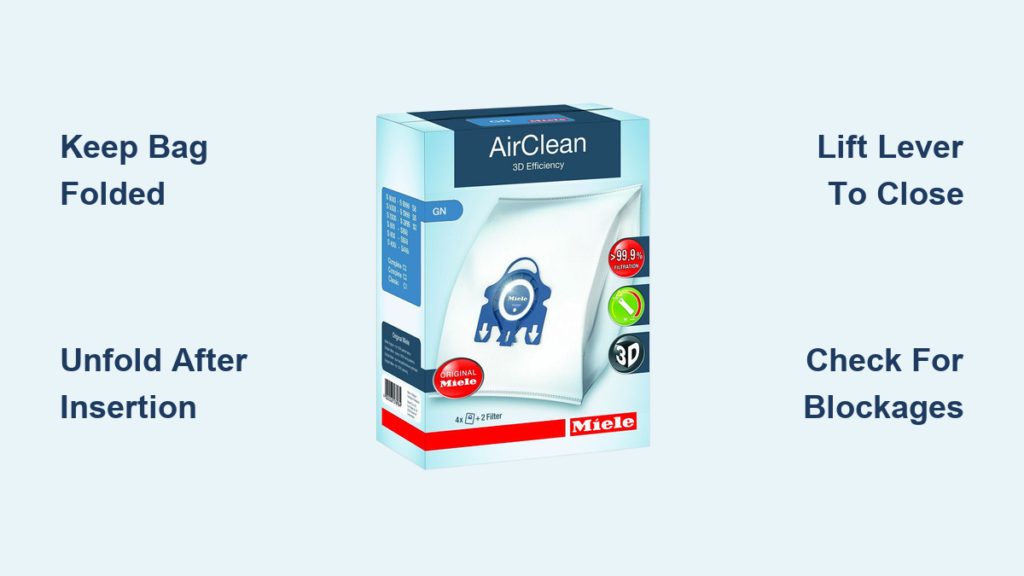
Keep the Bag Folded During Insertion
Take a new genuine Miele FilterBag from the box and leave it folded. Removing it from the packaging and inserting it while folded is the key to proper alignment.
- Align the bag’s cardboard collar with the holder opening inside the compartment.
- Push the bag as far as it will go into the holder until it seats firmly.
- Forcing the bag or unfolding it early can damage the material and break the airtight seal.
Unfold the Bag Once It’s Seated
After the bag is fully inserted, unfold it inside the dust compartment. Gently pull the sides outward so the bag expands and lies flat against the housing walls. Avoid touching the white filter media, since skin oils can reduce its dust-trapping efficiency.
Close the Lid Without Catching the Bag

Check That the Bag Is Clear of the Seal
Before shutting the lid, glance inside to confirm no part of the bag is sticking out or caught between the lid and the vacuum body. A pinched bag can tear or block the suction channel.
Press Down Until the Lid Clicks
Lift the front lever slightly as you lower the lid, then press down firmly until you hear a click. This lever action is required to engage the latch; do not slam the lid shut without lifting the lever. When properly closed, the bag automatically aligns with the suction port, creating a tight seal for full airflow.
Understand the FilterBag Indicator Light
How the Sensor Detects a Full Bag
Miele’s indicator uses a differential pressure system that measures airflow through the bag. As the bag fills, airflow drops and the light eventually illuminates. It is calibrated for normal household dust, including dust, hair, threads, carpet fluff, and grit.
Why the Light May Trigger Too Soon
Fine particles clog the FilterBag’s micro-pores faster than coarse debris, causing a false “full” reading. Materials that commonly cause this include:
- Sawdust
- Sand
- Plaster dust
- Flour
If you vacuum these regularly, expect to change bags more often, even if they don’t appear physically full.
Why the Light May React Too Late
Fibrous debris like pet hair and carpet lint packs tightly into the bag. The bag can reach capacity before the sensor detects the airflow drop, so the indicator may not light up in time to warn you.
Clear Blocked Airways That Trigger False Readings
Disassemble the Airflow Path
If the FilterBag indicator lights up shortly after a fresh bag change, the airways are likely restricted. Take these steps:
- Switch off the vacuum at the footswitch and unplug it.
- Detach the floorhead, hose, handle, and telescopic wand.
- Use a broom handle or long blunt rod to gently push debris toward the floorhead end.
- Shake out the handle, since clogs often loosen here once the parts are separated.
Safety reminder: Never try to clear blockages while the vacuum is plugged in.
Troubleshoot a Persistent Indicator Light
Reset the System After a Bag Change
After closing the lid, turn the vacuum on. The indicator should reset automatically within seconds. If it stays lit, work through these checks in order:
- Inspect the exhaust filter behind the rear panel for dust buildup and clean or replace it.
- Reopen the dust compartment and confirm the bag is fully inserted, unfolded, and not twisted.
- Verify the lid is fully latched and clicked into place.
Contact Miele Service if the Problem Continues
If the light remains on after replacing the bag, clearing blockages, and cleaning filters, the sensor itself may be faulty. Visit Miele’s website to:
- Book a technician online through the service portal
- Use the Manual Finder for model-specific instructions
- Locate an authorized dealer for parts and repairs
- Visit a Miele Experience Center for in-person support
Replace Bags on a Sensible Schedule
Watch for Visual and Performance Cues
Don’t rely only on the indicator. Replace the bag when you notice any of the following:
- Reduced suction power, even on hard floors
- Visible bulging of the bag through the housing window
- Dust left behind on carpets or hard surfaces
- Unusual strain or noise from the motor
Follow a Routine Replacement Timeline
A few helpful guidelines based on typical use:
- Average household: Every 3–4 months
- Homes with pets or allergy sufferers: Every 1–2 months
- Post-renovation or deep cleans: Immediately, regardless of fill level
Avoid the Most Common Bag Change Mistakes
Unfolding the Bag Too Early
Unfolding the bag before it sits in the holder causes misalignment and poor sealing. Always keep the bag folded until it is fully inserted, then expand it inside the compartment.
Forcing the Lid Shut
Slamming the lid without lifting the front lever can break the latch mechanism. Always lift the lever slightly as you close, then press until you hear a click.
Ignoring Hidden Blockages
Swapping in a new bag won’t restore suction if the hose or wand is clogged. If performance doesn’t improve, disassemble the airflow path and inspect every section.
Stick With Genuine Miele FilterBags
Off-brand bags may seem like a bargain, but they often don’t fit the holder precisely, which can cause the auto-alignment feature to fail and trigger false indicator readings. Genuine Miele FilterBags are engineered to match the vacuum’s airflow characteristics, sealing perfectly with the suction port and capturing fine particles as designed.
Frequently Asked Questions About Changing a Miele Vacuum Bag
How do I know when to change my Miele vacuum bag?
The FilterBag indicator light is the primary signal, but you should also watch for reduced suction, visible bag fullness through the housing, or dust left behind after vacuuming. With average household use, most people change the bag every 1–4 months.
Can I reuse or empty a Miele vacuum bag?
No. Miele FilterBags are designed for single use. The multi-layer material loses its filtration efficiency once exposed to dust, and emptying the bag breaks the airtight seal required for proper suction.
Why does the FilterBag indicator light stay on after I change the bag?
The most common cause is a blockage in the hose, wand, handle, or floorhead. Switch off and unplug the vacuum, then disassemble these parts and clear any debris. If the light stays on after that, a clogged exhaust filter or a faulty sensor could be the cause.
What kind of dust triggers a false “full” reading?
Fine particles such as sawdust, sand, plaster dust, and flour clog the FilterBag’s micro-pores very quickly. This restricts airflow and lights up the indicator even when the bag isn’t physically full, so expect more frequent changes when cleaning these materials.
Do I need to use genuine Miele bags, or are off-brand bags okay?
Genuine Miele FilterBags are recommended because they fit the holder precisely and work correctly with the indicator system. Off-brand bags may not seal properly, can slip out of alignment, and may cause false readings or reduced suction.
How do I clear a blockage in my Miele vacuum?
Turn off and unplug the vacuum, then detach the floorhead, hose, handle, and telescopic wand. Use a long blunt object like a broom handle to push debris toward the floorhead end, and shake out the handle to dislodge any remaining clogs. Never attempt this while the unit is plugged in.
Key Takeaways for Changing Your Miele Vacuum Bag
Changing a Miele vacuum bag is a quick task that protects both your cleaning results and your vacuum’s motor. Remember the essentials: keep the new bag folded during insertion, unfold it only after it seats in the holder, and close the lid with the front lever lifted until it clicks. If the indicator light behaves unexpectedly, check for blockages and fine-dust clogging before assuming the sensor is broken. The next time your Miele vacuum loses suction, grab a genuine FilterBag, follow the steps above, and you’ll have your cleaner back to full power in under two minutes.