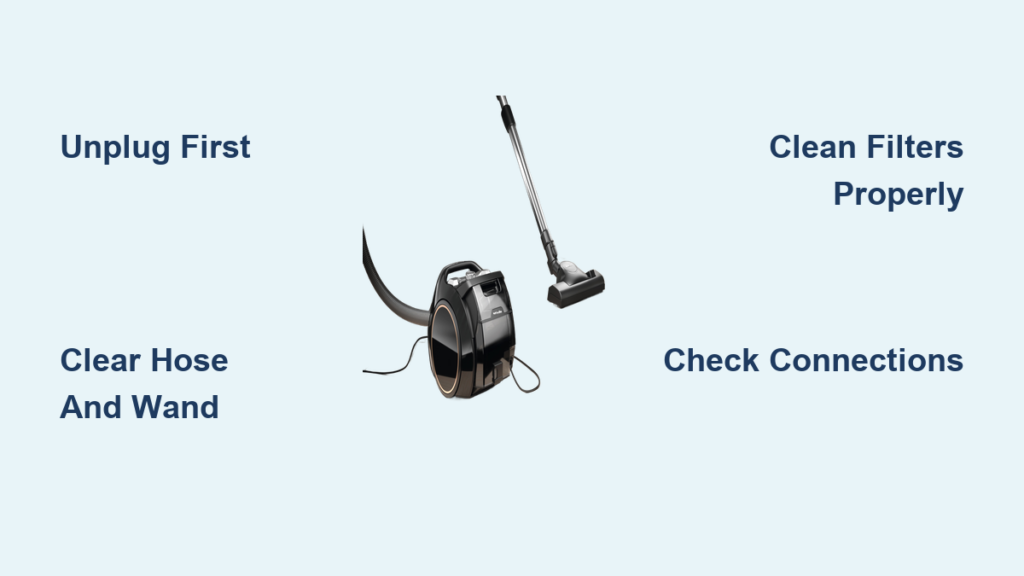
Is your Miele vacuum losing suction, overheating, or making strange noises? You are likely dealing with a blockage. Miele vacuums are built for performance, but even the best models can clog, especially in the hose, wand, or turbobrush. The good news is that most clogs are easy to fix with basic tools and a few minutes of effort. In this guide, you will learn exactly how to unclog a Miele vacuum step by step, diagnose hidden airflow issues, and prevent future blockages. Whether you own a Miele Blizzard CX1 or another bagless cylinder model, these proven methods will restore full suction power fast.
Check for Blocked Airways First
Reduced suction and a hot vacuum body are classic signs of a blockage. When air cannot flow freely, the motor works harder and overheats. Start your diagnosis in the airways before checking filters or the dust container.
Locate the Blockage Point
Inspect these key areas in order:
- Floorhead intake
- Telescopic wand interior
- Hose bends and connections
- Handle tube
Feel for resistance when blowing air through each section. A full blockage will stop airflow completely.
Clear Hose and Wand Clogs
- Unplug the vacuum using the footswitch and remove the power plug.
- Detach the floorhead, hose, wand, and handle.
- Use a broom handle or long rod to gently push debris toward the floorhead end.
- Shake the handle, since clogs often loosen and fall out easily.
- Reassemble and test suction.
Pro Tip: Never use sharp objects. They can damage internal linings and create future snag points.
Empty and Clean the Dust Container
A full dust container is one of the most common causes of weak suction and indirect clogging. Backpressure from an overfilled container forces debris into areas like the wand, where it gets stuck.
Empty Before It Reaches Max
- Open the dust container flap and empty contents before the dust hits the max. line.
- Do this after every few cleaning sessions, especially large jobs.
Deep Clean Annually
- Wash the container with water and mild dish soap.
- Rinse thoroughly and dry completely, waiting at least 24 hours.
- Reinsert only when fully dry to prevent mold and motor strain.
Warning: Never use soap on filters. Dish soap damages filter fibers and reduces efficiency.
Clean All Filters Properly
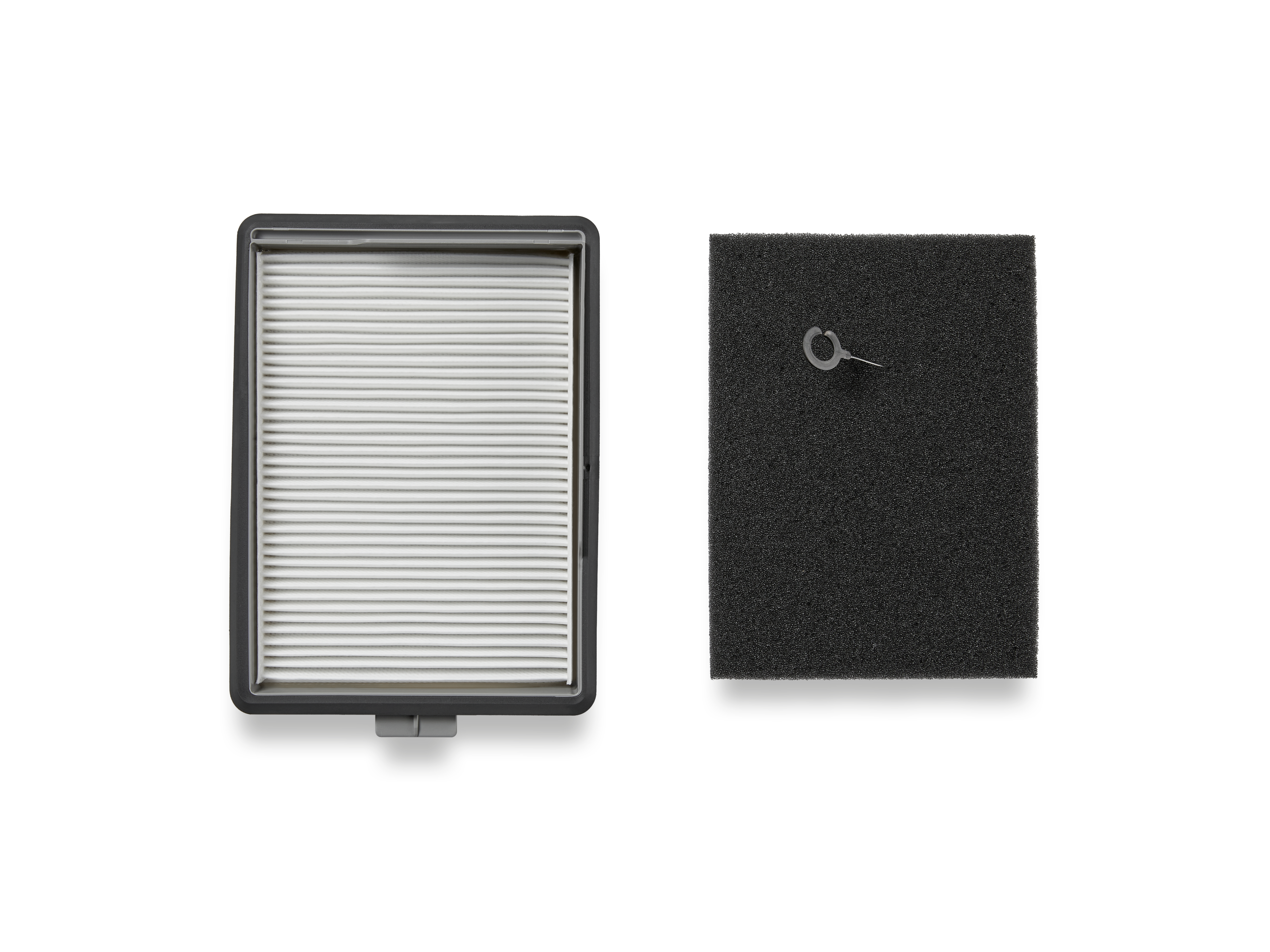
Dirty filters restrict airflow just like physical clogs. But cleaning them wrong can ruin them. Pay close attention to which cleaning agents are safe for each component.
Clean the Filter Frame
- Rinse under lukewarm water.
- Do not use soap or sharp tools.
- Pat dry with a towel and allow to air-dry fully before reinserting.
Rinse the Prefilter
- Remove and rinse gently.
- Never scrub or use detergent.
- Dry for 24 hours away from direct heat.
Hand-Wash the Fine Dust Filter
- Rinse only the outer surface. Never clean the inside.
- Do not brush or press hard.
- Let dry for at least 24 hours in a warm, ventilated area.
- Reinstall only when completely dry.
Critical: Using a damp filter can damage the motor and reduce suction by up to 40%.
Unclog the Turbobrush Roller
If the brush is not spinning, it is likely wrapped with hair or thread. Cleaning the roller regularly keeps your vacuum performing on carpets and rugs.
Cut Wrapped Debris Safely
- Unplug the vacuum.
- Flip the electrobrush upside down on a level, clean surface.
- Use scissors and follow the guide track along the roller.
- Cut all threads and hair缠绕 the brush ends.
- Run the vacuum briefly to suck up loose fibers.
Pro Tip: Clean the turbobrush monthly if you have pets or long hair in your home.
Fix Wand-Specific Clogs
Wands clog easily due to narrow tubing and poor maintenance habits. Since wand clogs are among the most common Miele issues, addressing them quickly prevents bigger problems.
Tap and Flush After Use
- After every session, tap the wand on a hard surface to dislodge debris.
- Run a dry cloth or soft brush through the tube to clear buildup.
Remove Stubborn Clogs
For compacted debris:
- Use a flexible wire or pipe cleaner.
- Gently push through from the handle end.
- Avoid metal coat hangers, as they can scratch the interior.
Warning: If your wand has an internal filter, a clogged filter can cause backup. Clean it monthly.
Open the Air Inlet Valve on Tight Carpets

If the turbobrush slows on thick rugs, it is not a clog. It is an airflow imbalance caused by tight carpet pile sealing the suction inlet.
Adjust the Air Inlet Valve
- Find the valve on the turbobrush housing.
- Turn the large brush symbol to the circle to open the valve.
- This allows extra air in, reducing suction drag on dense carpet.
Important: Close the valve (small brush symbol to circle) for normal use. Leaving it open reduces cleaning power on most surfaces.
Prevent Future Clogs

The best fix is stopping clogs before they happen. Small changes in how you use your vacuum dramatically reduce blockages.
Avoid Vacuuming Fine Powders
Never use the wand for:
- Flour
- Baking soda
- Dry cleaning powder
- Plaster dust
These clump inside the wand and form concrete-like blockages. Use a crevice or brush tool instead, or clean manually.
Use Correct Attachments
Match the tool to the job:
- Crevice tool for tight spaces
- Brush tool for powders and soft surfaces
- Floorhead for carpets and hard floors
Wrong attachments push debris into narrow tubes where they get stuck.
Secure All Hose and Wand Connections
Loose joints let debris escape and settle in gaps. Over time, this hidden buildup creates stubborn blockages.
Check Fit at Every Use
- Ensure the wand clicks securely into the hose and handle.
- Wiggle connections to test stability.
- Replace worn or cracked parts immediately.
Pro Tip: A loose seal creates backpressure, forcing debris into weak spots.
Upgrade to a Less-Prone Model
Some Miele models are more clog-resistant than others. If clogs are a constant battle, consider an upgrade.
Choose Wider Wand Designs
- Older models have narrower wands. Upgrade to newer ones with larger internal diameters.
- Look for direct dustbin systems with fewer bends.
Opt for HEPA Filter Models
- HEPA filters improve airflow efficiency.
- Better internal design reduces turbulence and clogging risk.
Business Owners: Train staff to inspect wands after every job. Immediate cleaning prevents most full blockages.
Follow the Maintenance Schedule
Stick to this routine to keep your Miele running strong.
| Task | Frequency |
|---|---|
| Empty dust container | Before max level |
| Clean filter frame | When soiled |
| Clean prefilter | When soiled |
| Wash fine dust filter | When soiled (dry 24 hrs) |
| Deep clean dust container | 1–2 times/year |
| Clean wand internal filter | Monthly (if present) |
| Inspect wand | After every use |
| Check connections | Weekly |
Never Use Soap on Filters
This rule cannot be overstated. Only the dust container can be cleaned with mild dish soap.
Filter Cleaning Rules
- Filter frame, prefilter, fine dust filter: Rinse with water only.
- No soap, no brushes, no sharp tools.
- No drying with hairdryers or radiators. Heat warps filter material.
Damaged filters reduce suction and shorten vacuum life.
Allow 24 Hours for Full Drying
Rushing reassembly with damp parts causes mold and motor damage. Patience here protects your vacuum long-term.
Drying Best Practices
- Place filters on a clean towel in a warm room.
- Keep away from direct sunlight.
- Never reinstall until completely dry. This takes at least 24 hours.
Expert Note: A single damp filter can reduce suction significantly and stress the motor.
Stop Immediately If the Wand Feels Heavy
Weight and weak airflow are early warning signs. Acting fast prevents a small issue from becoming a full blockage.
Act Before It Gets Worse
- Turn off and unplug.
- Disassemble the wand.
- Tap, flush, or use a pipe cleaner.
- Recheck connections and filters.
Time-Saver: Regular tapping after use takes 10 seconds and prevents most wand clogs.
Frequently Asked Questions About Unclogging a Miele Vacuum
Why does my Miele vacuum get hot during use?
A hot casing usually means a blockage is restricting airflow. The motor works harder to pull air through, generating excess heat. Check the floorhead, hose, wand, and handle for trapped debris and clear it before continuing.
How often should I clean the filters on my Miele vacuum?
Clean the filter frame, prefilter, and fine dust filter when they appear soiled or when you notice suction dropping. Deep clean the dust container 1–2 times per year. Always allow 24 hours of drying time before reinstalling any filter.
Can I use dish soap to clean Miele vacuum filters?
No. Dish soap damages filter fibers and reduces efficiency. Use water only on the filter frame, prefilter, and fine dust filter. Mild dish soap is safe only on the dust container itself.
What causes the turbobrush to slow down on thick carpets?
On tightly woven carpets, the suction inlet gets sealed by dense carpet pile, restricting airflow. Open the air inlet valve by turning the large brush symbol to the circle marking. Close it again for normal use.
How do I remove hair wrapped around the turbobrush roller?
Unplug the vacuum, flip the electrobrush upside down, and use scissors to cut along the guide track on the roller. Cut all threads and hair, then run the vacuum briefly to suction up the loose fibers.
Are older Miele models more prone to clogging?
Generally, yes. Older models often have narrower wand diameters and less optimized airflow paths. Upgrading to a newer model with a wider wand, HEPA filter, or direct dustbin system can significantly reduce clogging.
Key Takeaways for Unclogging Your Miele Vacuum
Most Miele blockages happen in the wand, hose, or turbobrush and are fixed in under 10 minutes. Always start with safety by unplugging before any work. Clean filters correctly, dry them fully for 24 hours, and never use soap on filter components. Avoid vacuuming fine powders through the wand, and use the right attachments for each job. With proper care and a simple maintenance routine, your Miele will deliver powerful suction for years. Now that you know the steps, grab your broom handle and get started. Your vacuum will be running like new by the end of the afternoon.